
Go Organic!
"Humankind has not woven the web of life. we are but one strand within it. Anything we do to the web we do to ourselves, all things are bound together, all things connect."
—Chief Seattle
Having gardened organically for over 30 years, I know no other way to garden. It all started when I was 15 years old and checked out Rachel Carson's book from the library — Silent Spring. Up until that point, I was oblivious about the environment. The impact Carson's book had on my life, made me read everything I could get my hands on about organic gardening. When I dug my first garden, it was organic.
After years of trial and error in the garden, my own backyard research, and reading organic resource material, I learned a few valuable lessons. The most basic, yet important part of organic gardening is building a healthy soil. Building healthy soil builds robust plants, which equals fewer problems with diseases and pests.
Inviting beneficial insects to live in your garden helps balance out the pests. Although it may take a few years of building a habitat for your beneficial army, they will be in your garden working day and night keeping the pests under control. Your organic garden becomes a small ecosystem that eventually requires less intervention on your part, because the system is working for you.
Planting the right plant in the right place, is a high priority in the organic garden. Unfortunately, I occasionally buy a plant on impulse. Once I take the plants home, I look it up the plants up in my resource books and realize I can’t give it what it needs to grow into a healthy specimen. When I make the mistake of planting the wrong plant, most likely the plant either dies or winds up with pests, diseases, or the plant simply does not thrive.
The organic garden is no place for wimps. Plant only strong, healthy plants in a healthy environment and the organic garden succeeds. Although the garden is never totally problem free, leaving out needy wimps from the organic plan diminishes pests and diseases. Fortunately, for nearly every problem there is an organic solution, but prevention is a lot easier than having to intervene.
Remember to relax! A bug bite on a leaf is not the end of the world or even of the plant itself. Identify the pest and monitor your organic garden for problems. A good example is: Every spring my roses get aphids on the new growth. I pick off as many as I can, but usually within a week the beneficial insects sweep in and take care of the problem. A few of the rose flowers look unsightly but the rest look fine. I used to spray an insecticidal soap on the aphids but now I let the beneficial insects do the dirty work.
Organic gardening is a process of learning about your soils, plants, pests, beneficial insects and achieving a balance in the garden. After gardening without pesticides, you will learn how to help your garden achieve a balance. It will be a healthy place where you and your children can safely garden and play.
by Debbie Teashon
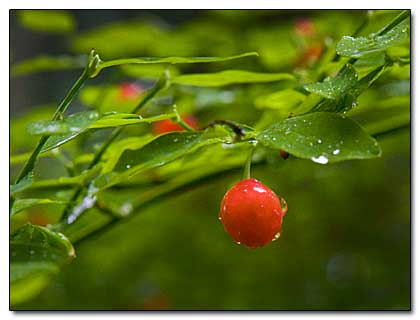
Photographed in author's garden.
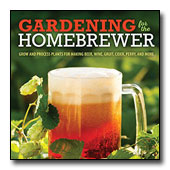
Gardening for the Homebrewer: Grow and Process Plants for Making Beer, Wine, Gruit, Cider, Perry, and More

By co-authors Debbie Teashon (Rainy Side Gardeners) and Wendy Tweton
Copyright Notice | Home | Search | Archives