©1997
Poppies

A Pacific Northwest
Cutting Garden

Introduction

A flower, when offered in the bud,
Is no vain sacrifice.
-Isaac Watts

I love to grow flowers for bouquets. My gardens have numerous plants perfect for cutting and bringing into my home. The problem is, I do not want to cut them because then my gardens look bare. A garden set aside for cut flower production, tucked into a corner of the yard, or placed next to a vegetable garden, is a good solution. Annual flowers can be planted right in with the vegetables, giving the vegetable garden a visual appeal while providing food for the body and soul. I can then supplement the bouquets with flowers from the regular gardens without leaving bare spots in the display.

Many plants can grow in the cutting garden. For spring, a planting of bulbs, such as daffodils, Dutch iris and tulips, is done in the fall. Once the soil warms up, annual cut flowers can be planted amongst the dying foliage of the bulbs, allowing the foliage to ripen while the annuals settle into their new home. Summertime allows a mixture of annuals and perennials, selected and cut during their peak blooming times.

There are many things to consider in choosing a plant for your cutting garden, including length of stem, strong stems, and, of course, how the flower holds up in a vase. Daylilies have a nice stem, but the flower only lasts the day it is cut. The same is true with hibiscus, although I have heard of people cutting the hibiscus in the morning and placing the cut flowers in the refrigerator until evening. The flowers are brought out in the evening for a one-night stand. Another consideration is how well the plant grows in our Pacific Northwest climate. If it does not do well, then I would rather choose a plant that will be easy to grow, and grow to its full potential. We can grow so many plants that perhaps we can discard those not easily adapted to our cool summers.

Annuals are usually a good source for cut flowers. Most will keep on blooming if you keep them from going to seed. Since this is in the cutting garden, this means we can pick the flowers to our heart's content. Keeping the flowers picked and deadheading any spent flower off the plant will keep an annual from setting seed and signaling the plant that its life cycle is complete. Too many flowers at once can mean we fill up our homes with flowers and give generous presents to our neighbors or friends. The drawback to annuals is they will need to be planted every year, as they will die at the end of each year.

Biennials are another group of plants we can look to for cut flowers. In their second year of life, they shoot up some of the most spectacular displays of flowers. When finished, they will die after setting seeds. Some biennials you can trick into living another year by keeping their flowers cut and not letting them set seed. The drawback to biennials is it is a two-year wait from the first seeding. If they are not a hybrid, you can let them reseed themselves by allowing a few flower stalks to go to seed.

Perennials make a fine addition to a more permanent cutting garden. Many plants in this group make wonderful cut flowers. The drawback to most perennials is they flower for only a few weeks to a month, once a year. I believe they are necessary for the cutting garden though, and will add a beautiful variety of flowers for your indoor bouquets.

Shrubs and trees can also provide beautiful flowers or foliage for bouquets, especially in the darker days of winter. Some shrub branches can be forced for late winter blooms inside the home.

When I go outside to cut my bouquets, I bring along a container of water and a sharp pair of scissors. Cutting with sharp scissors keeps the stems from being crushed. When the stem is cut, the flower goes immediately into the water. Once inside the house, the flowers are left soaking in water for about 8 hours in a cool, dark place. During that time, the stems take up water. Then I recut the stems, usually on a slant so the plant has more cells exposed to water. In addition, when the stem rests on the bottom of the vase, it will still have the cut end exposed to the water. I slit woody stems up the middle with a knife and open them up some. Poppies, or any other milky sap-producing stem, gets the stem end seared with a lighter lit under its end. This is best done twice: initially when first cut in the garden, and again when recutting the stem if it still oozes sap. With tulips and daffodils, I take a sharp pin to the swollen green base of the flower and poke a small hole. A florist taught me this trick to let air bubbles escape, and I have always done it just before recutting the stems.

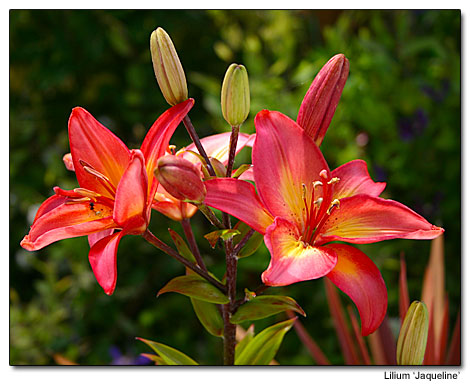
I see recommendations to recut the stems under water, although I do not do this. This helps to keep the flower stem from taking up air and creating bubbles. However, since I am constantly changing bouquets, it is not as important for me to get an extra day or two out of flowers. I am not good about changing water either. One exception is when I pick Oriental lilies. I do change the water in their vases, and recut their stems because they last for an exceptionally long period. You may want to keep your bouquets longer than I do. You can buy preservatives for the vase water, but I do not add this to my garden flower vases. If I have planned my cutting garden right, I can go right back out and put a fresh-as-a-daisy new bouquet in the house.

Cut most of your flowers when they are just coloring up and the outside petals or flowers are half-open. I try to cut flowers on racemes, such as Oriental lilies, just when the bottom flower is opening. Delphiniums, larkspur, gladiolus and other similar plants do well with cutting this way. As you become more accustomed to your cutting garden, you will become familiar with what the best timing is on each plant, keeping them fresher in the bouquet longer or for drying purposes.

Debra Teachout-Teashon
Photographed in author's garden.

Tell a friend about this page!


Questions, comments or suggestions? Would you like to communicate with other Pacific Northwest gardeners? Please join us on our forum.

Back to the Archives