
Is It a Slug, a Fly, or a Wasp?
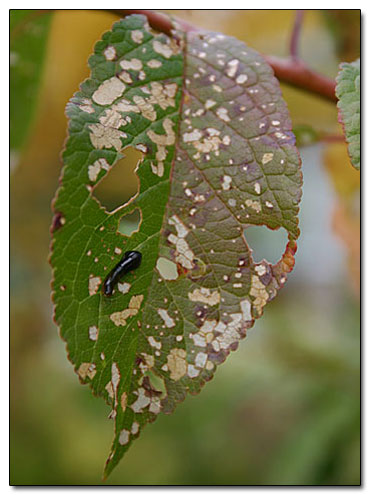
A pear slug is a sawfly, and if I saw a pear slug fly, I wouldn't know it. You see, a pear slug isn't really a slug, it's a sawfly. But it really isn't a fly at all; it's a wasp. Are you confused yet?
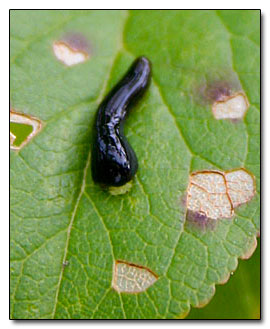
Pear sawfly is a fun sounding name for such a despicable, evil-looking, little creature. The insect gets its name as the larvae, which damages the foliage of pear, cherry, hawthorn, plum and mountain ash trees. It looks like a slimy tiny black slug just before it molts. After molting, it looks like an olive green, elongated blob. Who would even think that this slimy creature could be a fly--I mean wasp. Creepy! I discovered their tiny black bodies all over the foliage only after noticing the leaves were speckled brown.
You know what I did to stop them? I did nothing—zero, nada, zilch. During the year of their villainous attack in 2005, the tree looked blighted with unsightly, variegated brown and green leaves, which stayed on long after the larvae were gone for the season. The next year, I expected to see them again, but they didn't come back. If they did, they were in such small numbers I didn't detect their ugly little bodies on my trees.
Since you probably are reading this piece, expecting some form of advice on how to get rid of them, you don't want to be told to do absolutely nothing. Therefore, I offer the following advice from WSU Cooperative Extension. By the way, doing nothing is not on their preference list, but handpicking and destroying the slimers is the first of their integrated pest management recommendations. The next solution is washing them off the foliage with a strong stream of water. In other words, blast them! My only quandary with the first solution is figuring out how to crawl around on my plum tree in search of the little buggers to destroy. The second option seems more feasible, at least more enjoyable on a hot summer day. This may be an ongoing mission for more than a few days, you most likely won't get them all washed off the first time. Ready? Aim? FIRE!
Debbie Teashon

Gardening for the Homebrewer: Grow and Process Plants for Making Beer, Wine, Gruit, Cider, Perry, and More

By co-authors Debbie Teashon (Rainy Side Gardeners) and Wendy Tweton
Copyright Notice | Home | Search | Articles