

Anagallis monellii ssp. linifolia
BLUE PIMPERNEL, FLAX LEAF PIMPERNEL
syn. A. collina, A. linifolia
Family: Primulaceae
Pronounced: an-a-GAH-lis mon-EL-ee-aye
Quick Jumps
Growing Guide
Rainy Side Notes
GROWING GUIDE
Origin:
Mediterranean
Plant Group:
Biennial or Perennial
Hardiness:
Sunset zones: 4-9, 12-24.
USDA zones: 7-8.
Heat zones: 8-7.
Mature size:
Height: 8-24 inches (20-60 cm).
Width: 16 inches (40 cm).
Flowering period:
Summer until frost.
Flowering attributes:
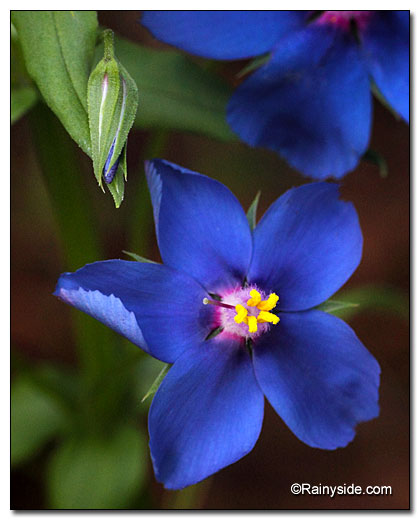
Long stalks of saucer-shaped, intense blue flowers, which are sometime tinged with red and bright yellow stamens.
Leaf attributes:
The subspecies is set apart by its narrower leaves that are sometimes whorled but usually opposite.
Growth habit:
Clumping.
Light:
Full sun.
Soil:
Fertile, well-drained soil.
Feeding:
Fertilize with a complete organic fertilizer.
Propagation Methods:
Soft tip cuttings in spring.
Sow seed and place in cold frame in spring.
Divide in spring.
Pruning Methods:
n/a
Pests and Diseases:
Aphids may be a problem.
Rainy Side Notes
Undoubtedly, you have heard of the scarlet pimpernel. Meet the blue pimpernel — although not as famous as its red cousin, it begs for attention with its cobalt blue petals! I grew the lovely plants in containers; however, I thought I would try them in the garden this year. In the past, I couldn't find a local nursery that carried them, so I bought the plants from a mail-order source.
This year, I bought seeds, sowed them in pots, and grew them in the greenhouse until the weather warmed up. Unfortunately, everything was late getting into the ground; the cold spring weather didn't want to give way to warmer temperatures. After hardening them off and planting them out in June, I had no idea if they would thrive in the ground since my experience came from pampered plants in pots. I was pleasantly surprised how well they performed — they immediately grew to sizeable plants and flowered all summer. Even though the slug mob appeared hungrier than usual this year, they overlooked the foliage.
This biennial/short-lived perennial is well suited for our Mediterranean climate since it hails from the Mediterranean region of Europe. Considered short-lived perennials, the Sunset Western Gardening book rates Anagallis monellii appropriate for our climate west of the Cascade Mountains, where they behave as annuals. The plants need well-drained soil but are equally at home in a rock garden or raised beds.
The British refer to pimpernels as "the poor man's weatherglass" because the blossoms close up on cloudy days. Once the shade hits them in the late afternoon, they remain rolled up until the following morning. When the sun comes out, the pimpernels unfurl their petals and show themselves off. Reportedly when the pressure falls, they will close up even when the sun is shining; however, I have not seen that phenomenon in my garden.
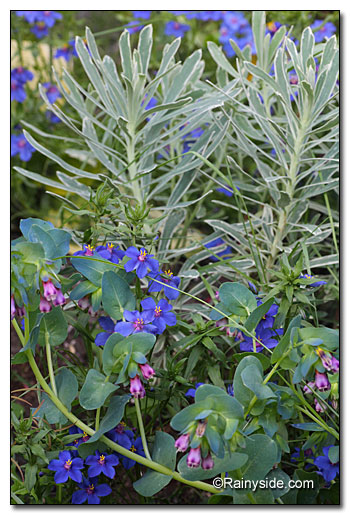
With their exuberant show of blue, the Anagallis monellii is a joy to behold. They intermingle with the annual Cerinthe ‘Pride of Gibraltar’, and the perennial young spurge —Euphorbia 'Silver Swan'.
Whether you use them as your barometer, in containers, or the borders, these lovely plants bring that rare blue hue to your garden — that's enough to make you smile!
Debbie Teashon
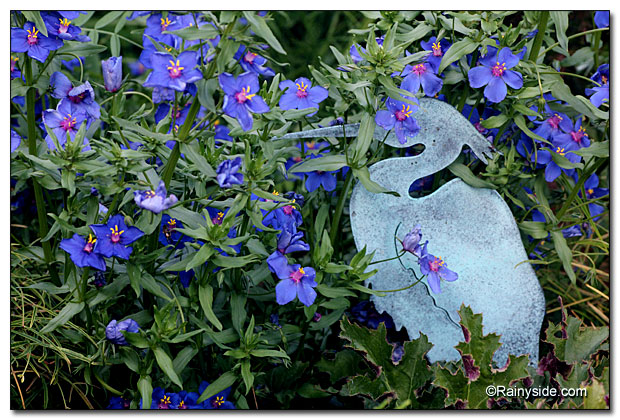
Photographed in author's garden.

Gardening for the Homebrewer: Grow and Process Plants for Making Beer, Wine, Gruit, Cider, Perry, and More

By co-authors Debbie Teashon (Rainy Side Gardeners) and Wendy Tweton
Copyright Notice | Home | Search | Annuals