
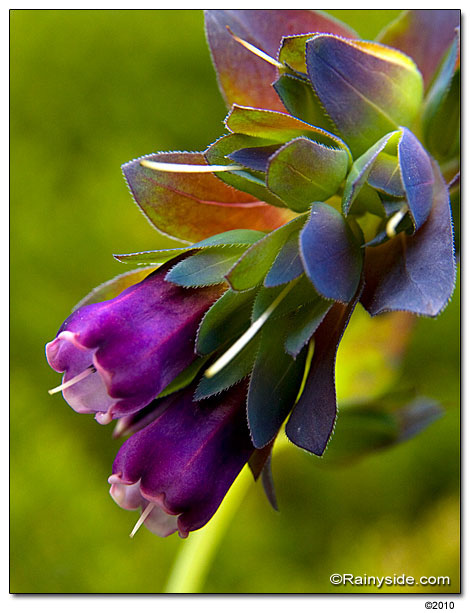
Cerinthe major 'Purpurascens'
BLUE SHRIMP PLANT, BLUE HONEYWORT, BLUE WAX FLOWER
Family: Boraginaceae
Pronounced: ser-IN-thee MAY-jur poor-pyoo-RAI-senz
Quick Jumps
Growing Guide
Rainy Side Notes
GROWING GUIDE
Origin:
Mediterranean.
Plant Group:
Annuals.
Hardiness:
Sunset zones: 1-24.
Mature size:
Height: 2 feet (60 cm).
Width: 2 feet (60 cm).
Flowering period:
Summer.
Flowering attributes:
One-inch long, purple tubes surrounded by large, almost heart shaped, purple-blue bracts.
Leaf attributes:
Glaucous, pale green-gray to blue, spoon-shaped foliage.
Light:
Full sun to light shade.
Soil:
For best results, plant in humus rich, moist but well-drained soil.
Fertilizing:
Use a complete organic fertilizer when seedlings appear and monthly applications thereafter.
Propagation Methods:
Sow seed in spring after danger of frost has passed.
Rainy Side Notes
Cerinthe major 'Purpurascens' is one of my favorite annuals to grow. The first time I grew it, only a little information was available; however, it quickly became a popular plant, and rightly so.
Cerinthe comes from the Greek words keros — wax — and anthos — a flower. Honeybees consider the flowers a vital nectar source and obtain wax from them. The genus is originally from the Mediterranean, so the plant grows well in our Mediterranean-type climate.
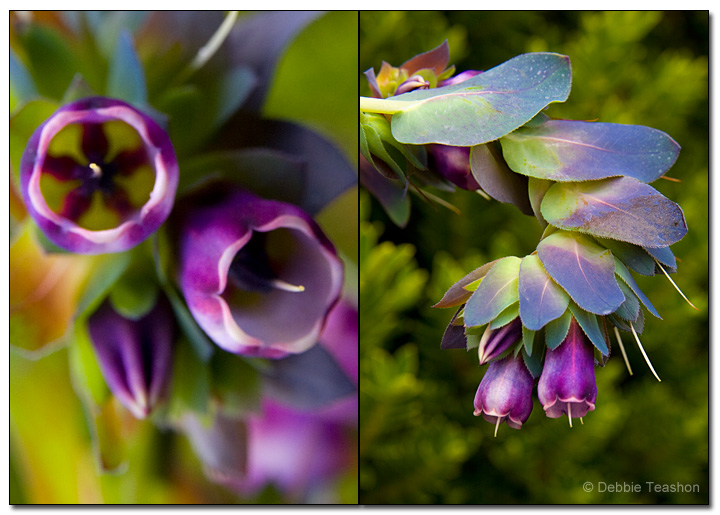
This beautiful and unusual annual attracts hummingbirds and bees. After the first planting, it will politely self-sow every year. Cerinthes grow well in containers, where they drape gracefully over the sides.
Before putting the flowers in a vase, the stem ends must be flamed or dipped in hot water.
Debbie Teashon
Photographed in author's garden.

Gardening for the Homebrewer: Grow and Process Plants for Making Beer, Wine, Gruit, Cider, Perry, and More

By co-authors Debbie Teashon (Rainy Side Gardeners) and Wendy Tweton
Copyright Notice | Home | Search | Annuals