
Thymus serpyllum 'Elfin'
ELFIN THYME
Family: Lamiaceae
Pronounced: TY-mus ser-PIL-lum
Quick Jumps
Growing Guide
Rainy Side Notes
GROWING GUIDE
Origin:
Garden.
Plant Group:
Sub shrub, Herbs.
Hardiness:
Sunset zones: All.
USDA zones: 4-8.
Heat zones: 9-1.
Mature size:
Height: 1-2 inches (3-5 cm).
Width: 4-8 inches (10-20 cm).
Flowering period:
Summer.
Flowering attributes:
Tiny, purple flowers.
Leaf attributes:
Glossy, green fragrant leaves.
Growth habit:
Hummock-forming.
Light:
Full sun.
Soil:
Well-drained, neutral soil.
Feeding:
Fertilizing is not necessary.
Propagation Methods:
Divide in spring or early fall.
Rainy Side Notes
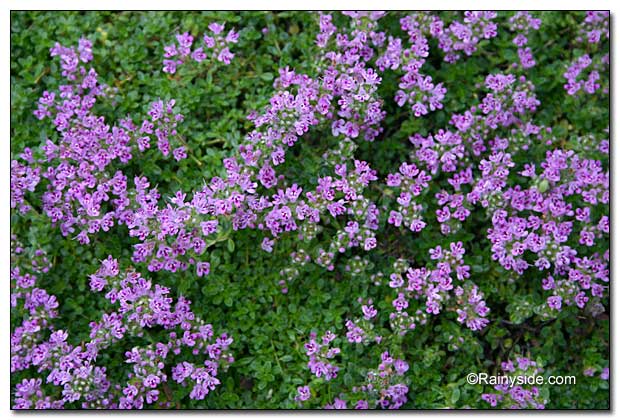
Can you imagine dancing elves prancing on this diminutive herb's tiny, purple flowers and foliage? (Insert inner child giggle here.) I can!
Although it is an herb, its primary use is ornamental. In our maritime climate, the minute foliage is evergreen, making it a valuable and handsome herb year-round. The tiny leaves packed tightly together form a dense mat, outlining the space between flagstones in dark green.
The small plant creeps over the edges of the stones wherever there are few footfalls. Growing on top of a rock wall, the plant trails down and softens the hard edges between the stones.
I prefer this ground cover to Corsican mint (Mentha requienii.) The mint tends to die back if not watered enough during our drought and in colder areas of the Pacific Northwest, and it will ultimately die during colder winters. After growing elfin thyme in places where I usually planted Corsican mint, I found the thyme to be superior.
Once established, thymes are drought tolerant; even during the dog days of rainless summers, they continue looking as fresh as spring. The ground covers further charms with its diminutive lavender-purple flowers in summer.
In partial shade, 'Elfin' grows into small hummocks. This hilly effect can look good depending on where the thyme is growing. However, some gardeners prefer the small herb to grow flat. Plant it where it receives five hours of sun daily or more to achieve a horizontal appearance.
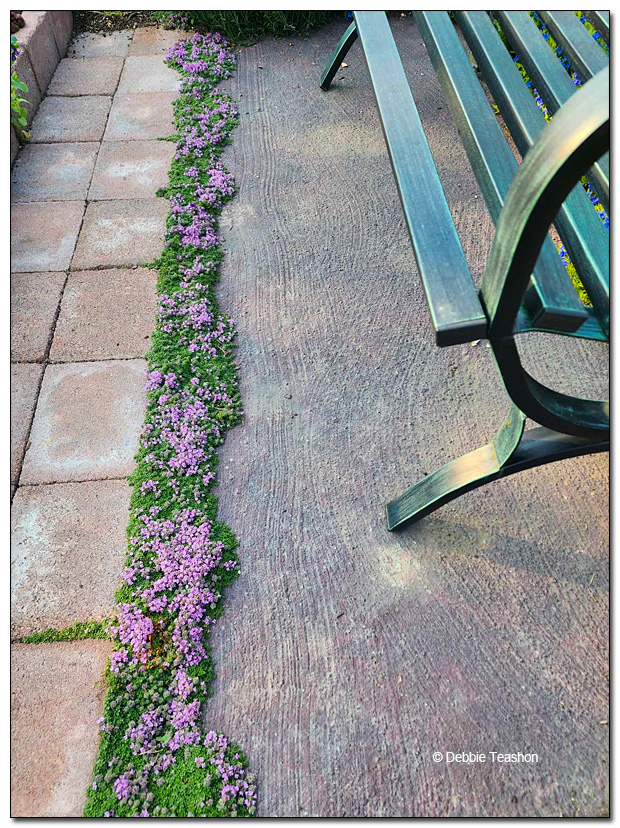
Photographed in author's garden.
A Pacific Northwest Plant of the Week (2012)

Gardening for the Homebrewer: Grow and Process Plants for Making Beer, Wine, Gruit, Cider, Perry, and More

By co-authors Debbie Teashon (Rainy Side Gardeners) and Wendy Tweton
Copyright Notice | Home | Search | Herbs