
Vaccinium ovatum
EVERGREEN HUCKLEBERRY
Family: Ericaceae
Pronounced: vak-SIN-ih-um oh-VAY-tum
Quick Jumps
Growing Guide
Rainy Side Notes
GROWING GUIDE
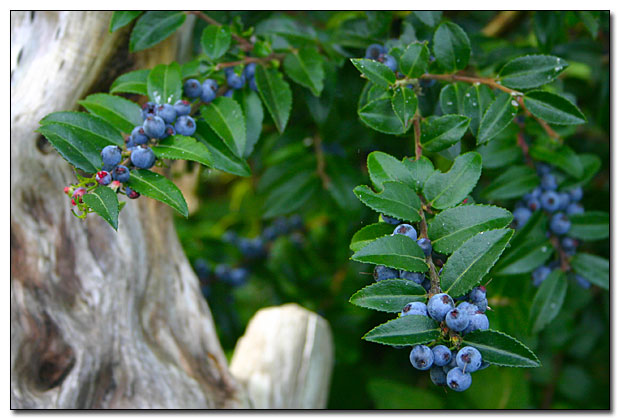
Vaccinium ovatum has evergreen leaves and deep blue huckleberries.
Origin:
Alaska to California.
Plant Group:
Shrub.
Hardiness:
Sunset zones: 4-7, 14-17.
USDA zones: 7-9.
Mature size:
Height: 2-3 feet (60-90 cm) in sun, up to 12 feet (4 m) in shade.
Width: up to 10 feet (3 m).
Flowering period:
March through May.
Flowering attributes:
Urn shaped, white to a blush of pink flowers.
Leaf attributes:
Evergreen, glossy, dark green leaves. New growth is red in spring.
Light:
Full sun to shade.
Soil:
Moist, well-drained, acidic soil.
Propagation Methods:
Semi-ripe cuttings mid to late summer or layer in summer.
Pruning Methods:
V. ovatum can be pruned into a hedge. Prune after flowering, remove dead branches.
Rainy Side Notes
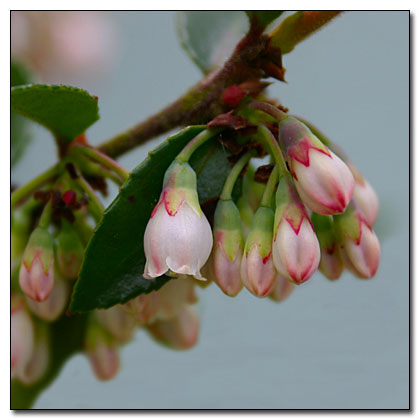
Urn-shaped huckleberry flowers.
This remarkable evergreen native shrub is valuable in the landscape. Vaccinium ovatum thrives in either sun or shade and is tolerant of salt spray. Surprisingly, we do not grow this shrub more often in the Pacific Northwest. It is a choice plant for the garden as a natural or trimmed hedge, hedgerow, or thicket as a wildlife habitat. It even grows well in a container.
The small, ovate, evergreen leaves look good year-round and have little urn-shaped flowers, followed by glossy, blackish-purple berries. The shrubs are a beautiful backdrop for mixed borders and are highly sought after in the florist trade for foliage. In a full-shade garden, grow it as a tall evergreen hedge. It produces more berries in a full-sun garden yet will not grow as tall as in the shade.
Indigenous Northwest tribes relished the berries of this shrub and would travel long distances to harvest them. They used the berries in many ways — eaten fresh, with oil, or dried into cakes.
After the first frost, the berries taste better. You can eat the berries or let the birds and other animals forage for them, including bears. Granted, you probably do not want to attract bears to your garden. Hummingbirds, bees, and butterflies flock to the flowers. Foliage may be a food source for the caterpillars of Spring Azure and Brown Elfin butterflies. In my garden, I grow these native shrubs for the local wildlife.
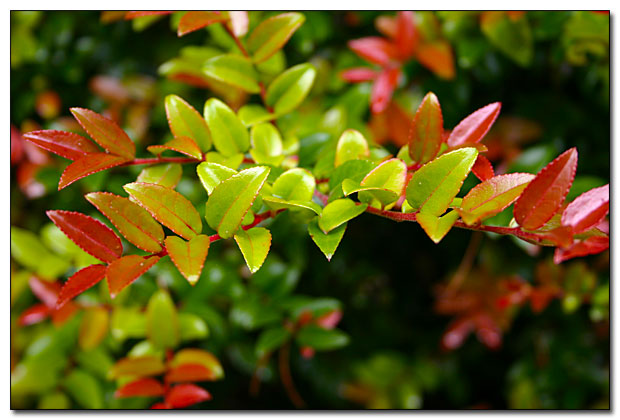
Brilliant, new leaf color.
Vaccinium ovatum is a 2005 Great Plant Pick.
Photographed in author's garden.
A Pacific Northwest Plant of the Week (2013)
Gardening for the Homebrewer: Grow and Process Plants for Making Beer, Wine, Gruit, Cider, Perry, and More

By co-authors Debbie Teashon (Rainy Side Gardeners) and Wendy Tweton
Copyright Notice | Home | Search | Natives