
Acer palmatum 'Sango-kaku'
CORAL BARK MAPLE
syn. A. 'Senkaki', A. 'Sango-kaku'
Family: Aceraceae
Pronounced: AY-ser pal-MAY-tum
Quick Jumps
Growing Guide
Rainy Side Notes
GROWING GUIDE
Origin:
Garden.
Plant Group:
Trees.
Hardiness:
Sunset zones: 1-10,12, 14-24.
USDA zones: 6-8.
Heat zones: 8-2.
Mature size:
Height: 20 feet (6 m).
Width: 15 feet (5 m).
Leaf attributes:
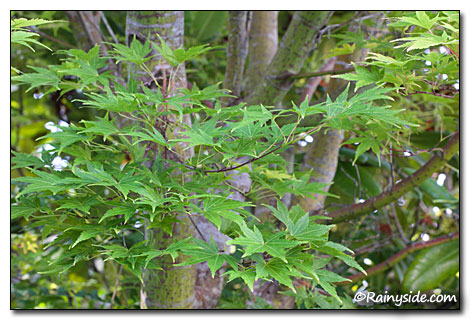
Pale yellow-green, 5-lobed leaf in spring, turning apricot and gold in fall.
Light:
Full sun or partial shade.
Soil:
Moist, well-drained soil.
Feeding:
Side dressing with compost.
Pruning Methods:
Prune to shape in late fall to winter.
Pests and Diseases:
Some pests that could be problems are aphids, scale insects, and caterpillars. Possible disease problems are verticillium wilt, tar spot, leaf spot and root rot.
Rainy Side Notes
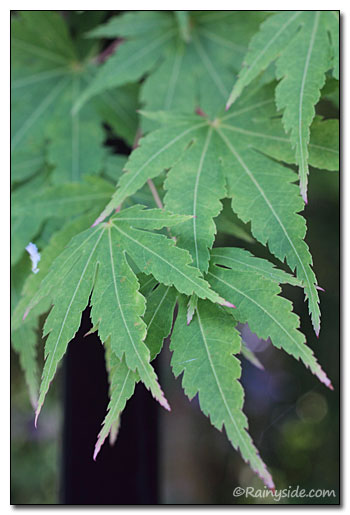
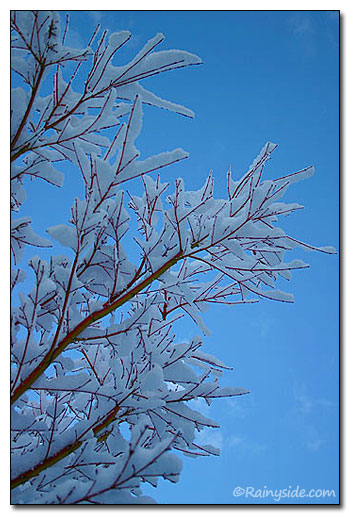
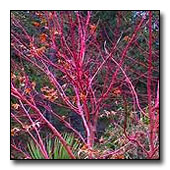
The coral bark maple is a popular tree with beautiful yellow-green leaves, tinged with red in spring. Later in fall, the leaves turn shades of apricot and gold. The bright, coral-red bark is its most outstanding feature during the winter season. Young branches, two years old or less, possess the bright color, while the mature branches fade back into the landscape. During its youth this maple is a strong grower, quickly making its vase-shaped presence a handsome focal point in the landscape.
In my garden before the coral bark maple leafs out, an early-flowering plum tree bursts into blooms. The snow white flowers cover the tree while the maple's coral-red twigs create a fiery backdrop above and behind the flowers. I look forward to this scene in late winter.
T.H. Lowinsky introduced the coral bark maple into Europe where it's called A. 'Senkaki', although Daisy Hill Nurseries in Ireland may have introduced it into Great Britain. Its Japanese name, 'Sango-kaku', means "coral tower."
.jpg "full tree")
In the Pacific Northwest, it was chosen as a Great Plant Pick, and is our Pacific Northwest Plant of the Week (2013)
Photographed in author's garden.
Gardening for the Homebrewer: Grow and Process Plants for Making Beer, Wine, Gruit, Cider, Perry, and More

By co-authors Debbie Teashon (Rainy Side Gardeners) and Wendy Tweton