
Heptacodium miconioides
SEVEN-SON FLOWER, SEVEN SONS TREE
syn. H. jasminoides
Family: Caprifoliaceae
Pronounced: hep-tuh-KOH-dee-um mik-on-ee-OY-deez
Quick Jumps
Growing Guide
Rainy Side Notes
GROWING GUIDE
Origin:
China.
Plant Group:
Shrub.
Hardiness:
Sunset zones: 2b-6, 14-17.
USDA zones: 5-8.
Mature size:
Height: 20 feet (6 m).
Width: 8-10 feet (2.5-3 m).
Flowering period:
Late summer to late autumn.
Flowering attributes:
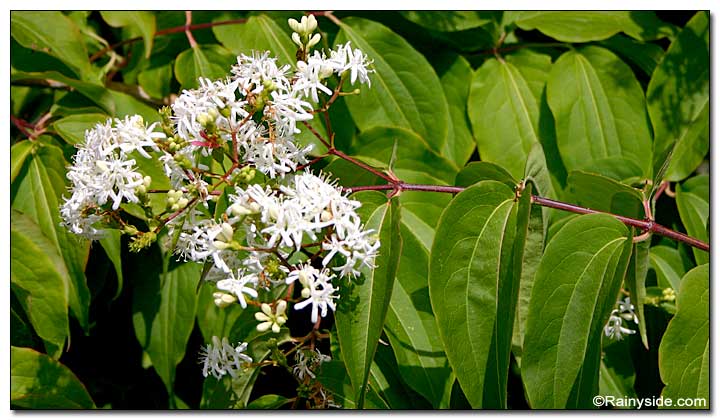
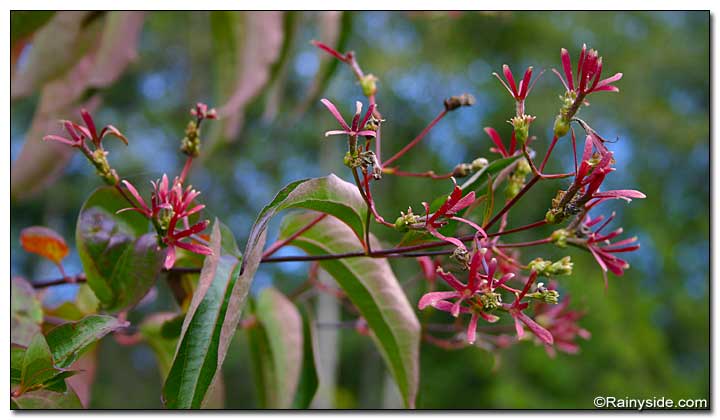
Clusters of fragrant, creamy white flowers born in clusters of seven, followed by clusters of showy purple fruit with bright purple-red calyxes.
Leaf attributes:
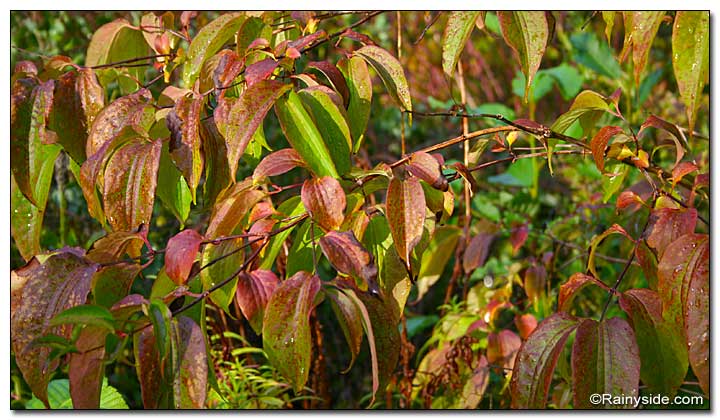
Four-inch long, ovate, deciduous, green leaves that turn purple-bronze in autumn.
Light:
Full sun to light, dappled shade.
Soil:
Fertile, well-drained soil.
Feeding:
Side dress with compost and a complete organic fertilizer in the spring.
Propagation Methods:
Sow seed as soon as ripe.
Softwood cuttings in spring.
Pruning Methods:
In late winter or early spring prune out crossed branches or branches too tall, to maintain good shape.
Rainy Side Notes
The seven sons tree (Heptacodium miconioides) was named a Great Plant Pick for 2008. I heartily agree this is a choice plant for the Pacific Northwest. I first bought mine from Heronswood Nursery in 1998, and at the time, I couldn't find any cultural advice on how to grow it. It is one of my favorites, easy to grow, large shrubs or small trees. Unfortunately, this shrub isn't drought-tolerant, so it needs supplemental watering during our annual drought.
I pruned my plant to a single trunk so it appears to be a small tree instead of a large shrub. At its base, I planted Clematis 'The President'; the vine climbs into the branches and flowers in spring and again in summer, giving the shrub another season of interest. In the fall, red calyces follow the fragrant, creamy white flowers born in seven clusters that bloom in late summer. The leaves turn a decorous purple-bronze hue in fall.
The genus was first collected in 1907 by E.H. Wilson in Hupei Province, China. Afred Rehder from the Arnold Arboretum described the new genus in 1916. Rehder named the collected specimens hepta, which means seven, and codium refers to the flower head. The large shrub was forgotten until 1980 and rediscovered by the Sino-American Botanic Expedition.
Recently introduced to this country by the Arnold Arboretum and U.S. National Arboretum, this beautiful multi-stemmed shrub or small tree is not bothered by pests or diseases! H. miconioides species are rare in China, with few, if any, found growing in the wild anymore.
This shrub is excellent for late summer, fall, and winter interests. The bush has tan bark that exfoliates to reveal an attractive brown inner bark. The white buds form in August, and in September, the flowers open with a jasmine fragrance. The calyx turns bright red when cooler weather sets in and stays until the first hard frost.
During a good year, the shrub turns red from numerous calyces. Another plus for this shrub is its salt tolerance, which makes it a useful plant near the seashore. It also attracts butterflies.
For more images of this beautiful tree, watch the short video (above right), a montage of images — Four Seasons with the Seven Sons Tree.
Photographed in author's garden.
Gardening for the Homebrewer: Grow and Process Plants for Making Beer, Wine, Gruit, Cider, Perry, and More

By co-authors Debbie Teashon (Rainy Side Gardeners) and Wendy Tweton.
Copyright Notice | Home | Search | Shrubs & Trees