
Ribes sanguineum glutinosum 'Claremont'
PINK FLOWERING CURRANT, WINTER CURRANT
Family: Grossulariaceae
Pronounced: RYE-bees san-GWIN-ee-um
Quick Jumps
Growing Guide
Rainy Side Notes
GROWING GUIDE
Origin:
Garden.
Plant Group:
Deciduous shrubs.
Hardiness:
Sunset zones: A3; 4-9, 14-24.
USDA zones: 6-8.
Heat zones: 8-6.
Mature size:
Height: 8 feet (2.5 m).
Width: 6 feet (2 m).
Flowering period:
Late winter to early spring.
Flowering attributes:
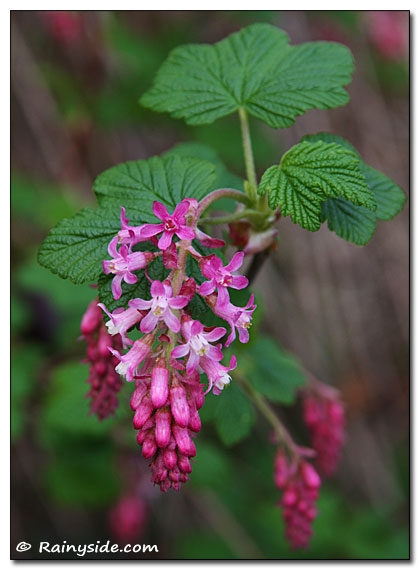
Rosy-red buds open to small, tubular, pink flowers on 6-inch long racemes that age to red.
Leaf attributes:
Dark green, 2-4 inch long, maple-like, 3-5 lobed leaves.
Growth habit:
Deciduous, upright shrub or small tree.
Light:
Full sun to partial shade.
Soil:
Medium fertile, well-drained soil.
Feeding:
Side dress with compost in fall.
Propagation Methods:
Hardwood cuttings in winter.
Semi-ripe cuttings in late summer and early fall.
Pruning Methods:
Prune severely after flowering if shrub becomes leggy.
Pests and Diseases:
Mostly disease resistant; however, all ribes can harbor white pine blister rust, so growing near pines is not recommended.
Rainy Side Notes
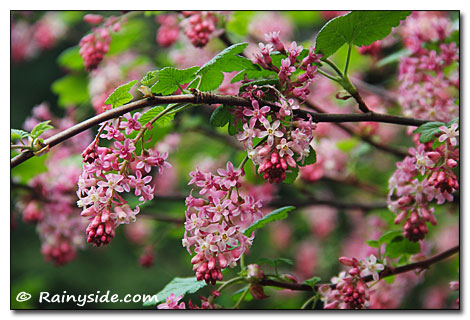
The selection, Ribes sanguineum var. glutinosum ‘Claremont,’ was found in the Del Monte forest on the Monterey Peninsula in California. What sets this form apart is its racemes are longer because they contain many more flowers than the species. In the cooler areas of the Pacific Northwest, it can handle full sun; however, partial shade and dappled shade is warranted in hotter climates.
Even though this shrub prefers moist, well-drained soil, it is drought tolerant once established, requiring little additional water during our typical summer drought in the maritime Northwest. Birds favor the shrub's one-third-inch diameter, blue-black fruit that ripens later in the summer.
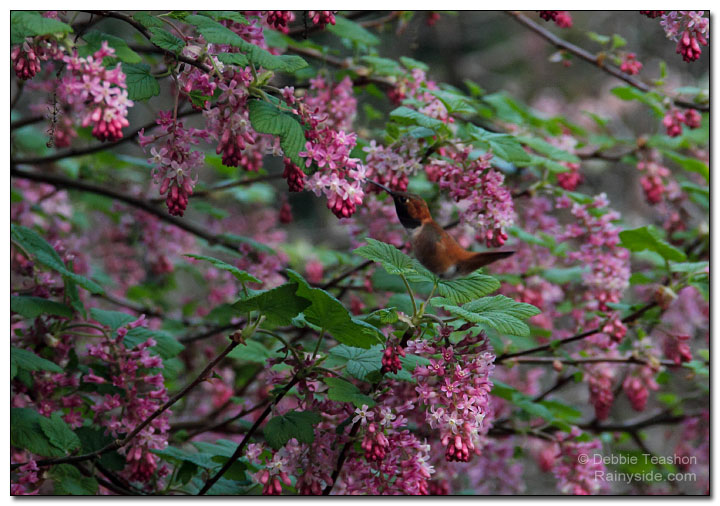
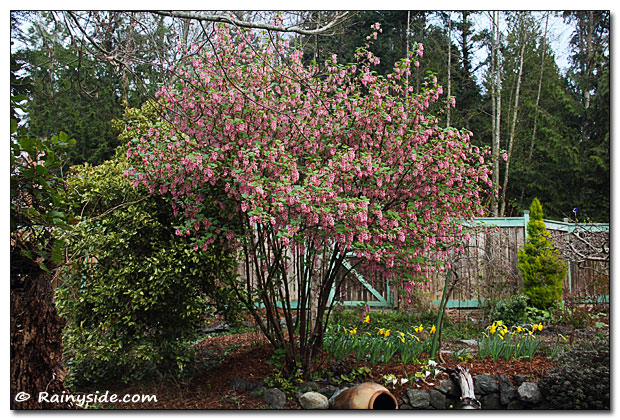
Flowering currants attract hummingbirds like no other shrub in late winter to early spring. One of my favorites, R. 'Claremont', not only keeps the hummingbirds coming back for more but also does it superbly by cloaking itself in pink. I view its welcoming branches above my pond, covered in racemes of dark pink buds, opening to a lighter hue of pink. After the early flower show, it fades into the background until the following late winter to early spring.
Photographed in author's garden.

Gardening for the Homebrewer: Grow and Process Plants for Making Beer, Wine, Gruit, Cider, Perry, and More

By co-authors Debbie Teashon (Rainy Side Gardeners) and Wendy Tweton.
Copyright Notice | Home | Search | Shrubs & Trees